
Guide to Charger Factories: How to Choose a Reliable One-Stop Power Solution Partner
Updated on January 8, 2026
In the fast-paced world of consumer electronics, a reliable and efficient charger factory is often the key to supply chain success. Whether for mobile phones, laptops, tablets, or emerging smart wearables and IoT devices, safe, stable, and cost-effective charging solutions are an indispensable part of the product. This article will delve into the core competencies of a modern charger factory and provide you with a comprehensive guide to choosing an ideal manufacturing partner.
Table of contents
Why is Choosing a Professional Charger Factory Critical?
Despite its small size, a charger integrates high voltage, thermal management, electromagnetic compatibility, and precision electronics. Products from a non-professional or non-compliant factory may hide risks of overload, short circuits, overheating, or even fire, directly endangering end-user safety and potentially causing devastating damage to brand reputation. A professional charger factory can provide:Safety and Compliance Assurance: Ensures products fully comply with mandatory certifications for target markets (such as UL, CE, FCC, PSE, CCC, KC) and international safety standards (like IEC 62368-1).
Technical R&D Capabilities: Possesses end-to-end technical capabilities from circuit design and PCB layout to thermal structure and mold development, meeting challenges posed by new technologies like fast charging (e.g., PD3.1, QC5) and GaN (Gallium Nitride).
Scale and Cost Efficiency: Optimizes costs while ensuring quality through vertical supply chain integration, bulk purchasing, and automated production.
Quality Control System: Establishes a closed-loop quality control process from IQC (Incoming Quality Control) to IPQC (In-Process Quality Control) and OQC (Outgoing Quality Control).
Analysis of Core Competencies of a Top Charger Factory
Comprehensive R&D and Design SupportODM/OEM Services: A superior factory can not only manufacture according to provided designs (OEM) but also offer one-stop ODM services from concept to finished product, including industrial design, circuit solution development, prototyping, and debugging.
Rapid Prototyping Ability: Capable of providing fully functional samples in a short time, accelerating the client's product time-to-market.
Technological Foresight: Keeps pace with the latest technology trends such as USB PD, PPS, wireless charging, and multi-port intelligent power distribution.
Rigorous Quality Control and Testing Laboratories
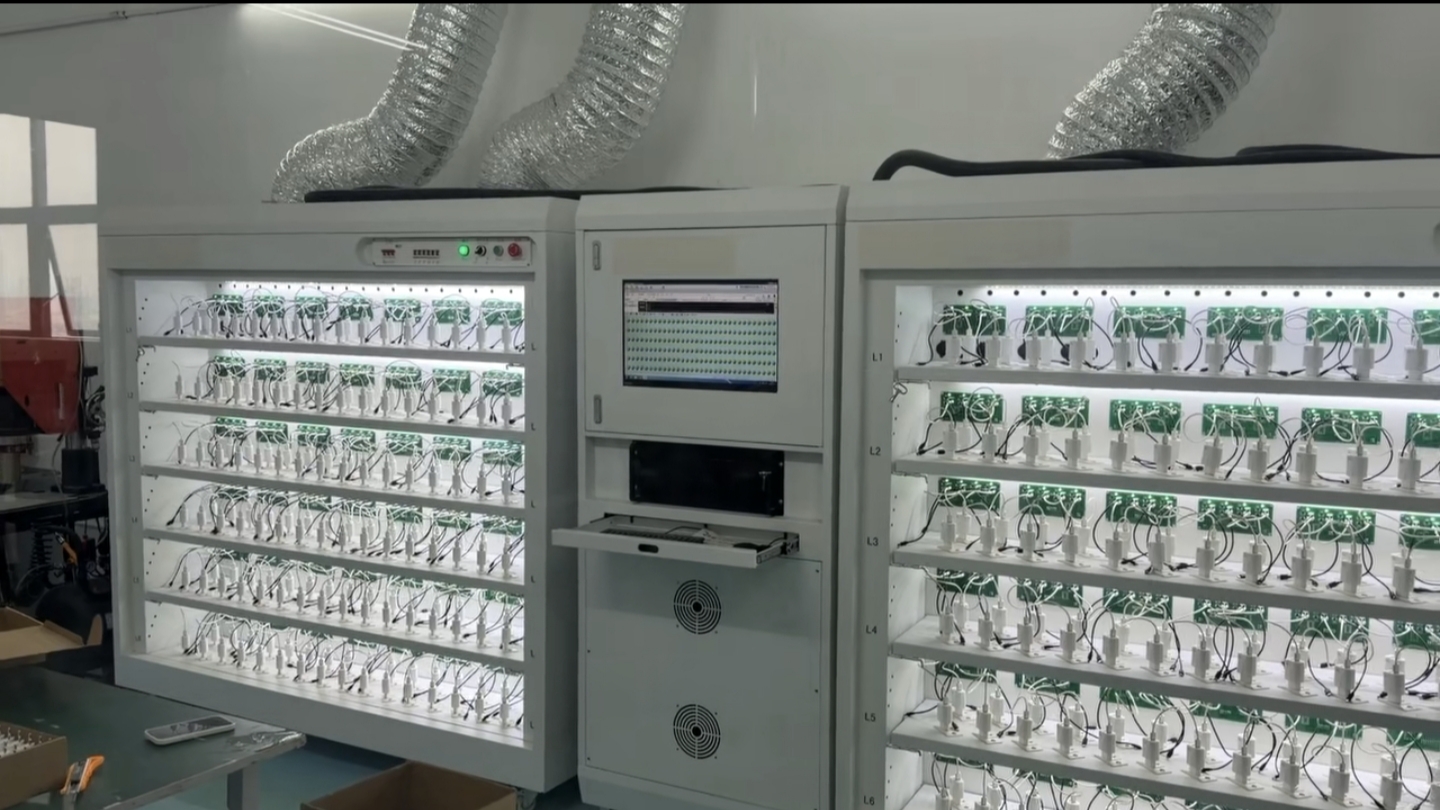
Safety Compliance Testing: Equipped with professional testing facilities to conduct a full suite of tests including input/output characteristics, efficiency, ripple & noise, temperature rise, withstand voltage, insulation resistance, and drop tests.
Reliability Testing: Conducts extended aging tests, high/low temperature cycling, damp heat tests, etc., ensuring stable product operation under various harsh conditions.
EMC Laboratory: Pre-tests and resolves electromagnetic interference issues to ensure products pass certification smoothly.
Automated Intelligent Manufacturing and Production Capacity
SMT Assembly Lines: High-precision, high-speed placement equipment is fundamental to ensuring PCBA quality and consistency.
Automated Assembly: Employs automation in key processes (e.g., dispensing, screw fastening, soldering) to enhance efficiency and consistency.
Scalable Production Capacity: Possesses the stable delivery capability to handle large-volume orders while remaining flexible for small to medium-volume custom orders.
Global Certification and Compliance Expertise
Familiar with energy efficiency standards (e.g., DoE Level VI, CoC Tier 2, ErP) and environmental directives (e.g., RoHS, REACH) in major global markets.
Has extensive experience in certification applications and can efficiently assist clients in obtaining necessary certifications, shortening market access time.
How to Select and Evaluate Your Charger Manufacturing Partner?
Define Your Requirements Clearly: First, determine your product positioning (consumer/industrial grade), technical specifications (power, protocol), target markets, estimated volume, and budget.Conduct Factory Audits:
On-site Visit: Physically inspect production lines, testing laboratories, warehouse management, and ESD protection measures.
Document Review: Examine their quality manual, procedures, past certification certificates, and customer case studies.
Team Assessment: Communicate with their engineering, quality control, and project management teams to evaluate their professionalism and responsiveness.
Request Samples and Trial Production: Small-batch trial production is the best test of a factory's true capabilities and cooperation quality. Focus on sample quality, communication efficiency, and problem-solving ability.
Evaluate Supply Chain Depth: Understand the factory's control over the supply chain for critical components (e.g., ICs, capacitors, transformers), which is particularly important during chip shortages.
Consider Total Value, Not Just Price: The lowest quote may mean compromises on materials, processes, or testing. Weigh quality, service, technical support, and total cost of ownership.
Conclusion: Building a Long-Term, Win-Win Partnership
In a highly competitive market, choosing a charger factory with solid technology, reliable quality, and smooth communication is more than just selecting a supplier; it's choosing a technical and strategic partner for mutual growth. Through thorough due diligence, clear communication, and phased collaboration, you can establish a stable, efficient, and competitive supply chain, injecting powerful momentum into your end products.Recommended Next Steps: After creating a shortlist of potential factories, prepare a detailed technical specification sheet and a list of questions. Proactively initiate inquiries and audits to begin your journey toward high-quality charger manufacturing.